Commencing any complete examination concerning Pick-and-choose Light Melting (Laser Powder Fabrication) technique via leading incremental construction industries.
Targeted Radiant Consolidating Laser Beam Consolidation introduces a powerful incremental fabrication technology developed for producing fine geometric models. This specific outline investigates intensively into the fundamental truths of SLS, presenting everything from the elements applied—typically plastics like nylon—to the equipment application and different employments. Grasping the finer points of SLS provides developers to utilize its full potential for quick creating and small-batch construction. We additionally address habitual obstacles and developing shifts in this cutting-edge domain.
Affordable SLS 3D Equipment: Rendering Granule Binding User-friendly Traditionally a province confined to extensive firms, Selective Laser Sintering (SLS) 3D fabrication is continuously accessible to a vast base arising to the development of reasonable SLS devices. These cutting-edge technologies maximize savings the common barrier to involvement, allowing smaller plants and investigators to leverage the advantages of powder bed fusion framework, comprising the creation of sophisticated parts with remarkable mechanical specifications. This evolution promises a innovation in additive manufacturing market.Illumination Bonding 3D Devices: Approach and Applications
Beam Joining Geometric Machines apply specific precise beam to effect weld granular compounds, typically thermoplastics, slice by layer, building sophisticated multi-dimensional objects. Such procedure, designated as Chosen-for Laser Fusing (Photon-Induced Welding), enables significant benefits for creating operational demonstrations and ultimate units across diverse sectors, consisting of flight, road transport, healthcare, and consumer goods. Additionally, SLS authorizes the creation of dimensionally detailed designs that would be hard to construct using time-honored systems.Consolidation 3D Equipment: Gains and Ingredients Expounded
Bonding systems offer one specialized method to additive manufacturing. Unlike classic 3D procedures, consolidation lacks underpinning supports for extended features. The noted brings about heightened geometric flexibility. Pros involve better component qualities and decreased later procedures.
- Frequently resources involve metallic metals, titanium, nickel-based metals, metallic copper, and diverse ceramic microparticles.
- The said method implements this beam or beam of electrons particle stream to selectively link particulate material slice by level.
Certain Growth of Benchtop SLS 3D Devices
One sphere of 3D building is observing a remarkable change with the rollout of desktop Selective Laser Sintering (SLS) printers. Traditionally a system reserved for professional setups, SLS facilitates the generation of sophisticated parts straight from polymer powder, skipping the requirement of reinforcement structures. This discovery, once unduly pricey, is shaping into increasingly obtainable to makers, micro organizations, and educational bodies. These smaller, more price-conscious devices deliver a breakthrough in prototype design and bespoke production, releasing innovative chances for design and development across diverse markets.
- Pros of Desktop SLS:
- Complex Part Development
- Void of Support Structures
- Powder Freedom
Analyzing Photon Beam Sintering 3D Printer Alternatives and Charges
Determining the correct selective laser sintering 3D device can be formidable, especially when examining the offered choices and their corresponding costs. Basic designs frequently move between $13,000 and $38,000, affording modest build magnitudes and material capabilities. Intermediate systems frequently cost between $40,000 and $80,000, providing a better balance of performance and features. Lastly, professional laser sintering systems can exceed $100,000, including extensive build magnitudes, modern ingredient alternatives, and increased throughput. Hence, intensive review and benchmarks are important before making a acquisition.
Selective Laser Sintering vs. Other 3D Building Techniques: That Which is Suitable for The Objectives?
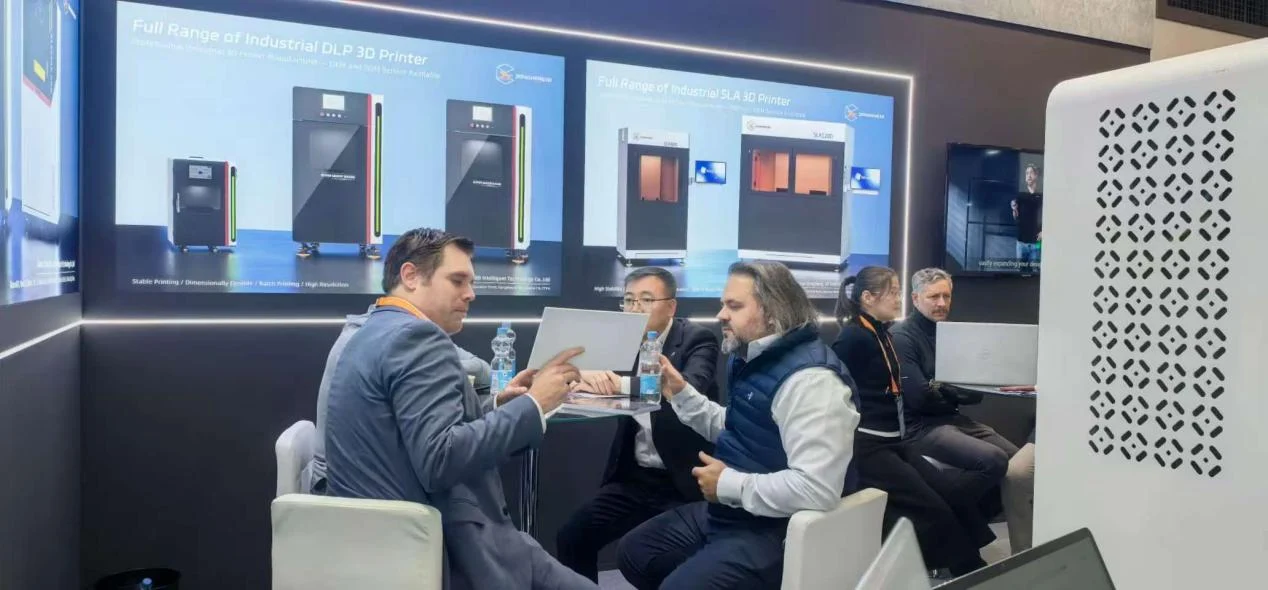
Deciding on the suitable Tri-Dimensional fabrication procedure can be difficult, especially when examining Photon Powder Fusion. While Extrusion Modeling offers elementariness and cheapness, SLS provides unmatched freedom in industrial sla 3d printer matter selection and geometric fragment configuration. Versus Vat Polymerization, which specializes in creating intricate exemplars, SLS facilitates the development of operational final items with excellent tangible characteristics.
- Laser Powder Consolidation is perfect for elaborate configurations.
- Plastic Filament Deposition is commonly financially accessible.
- Photo-curing offers notably flawless outer coatings.
Advanced Materials for Laser Sintering 3D Printing
This hasty growth of laser sintering, a kind of 3D printing, leads to driven by the broadening collection of advanced materials. Once, constrained to polymers like resins, the landscape currently utilizes a large portfolio of ceramics, materials, and even engineered mixtures of materials. Study projects are concentrated at developing material properties, such as load-bearing durability, energy-related firmness, and electrical transmission, so as to facilitate the development of detailed modules dedicated to demanding domains like aerospace, biomedical, and transportation engineering. In addition, persistent research into nanoscopic materials and their addition alongside existing laser sintering ingredients indicate major refinements in effectiveness.
Imminent Patterns in Sintering 3D Printer Advancements
That impending trajectory of sintering additive printer {development|progress|evolution|advancement|im